Parametric & 3D
Parametric Equations: What x(t) and y(t) Mean
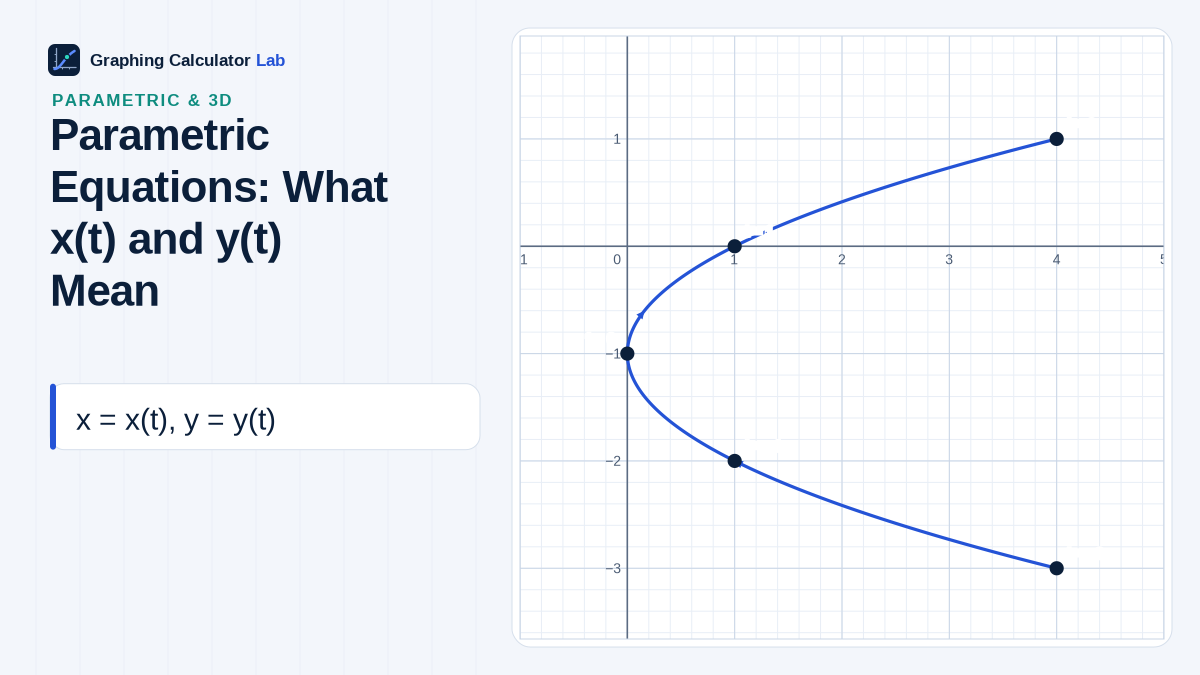
Parametric equations describe a curve with x = x(t) and y = y(t). Learn how to graph them from a table, eliminate the parameter, and read motion from the graph.
Guide topic
Parametric equations, direction and parameter range, and graphing surfaces z = f(x, y) in three dimensions.
Parametric equations describe a curve with x = x(t) and y = y(t). Learn how to graph them from a table, eliminate the parameter, and read motion from the graph.
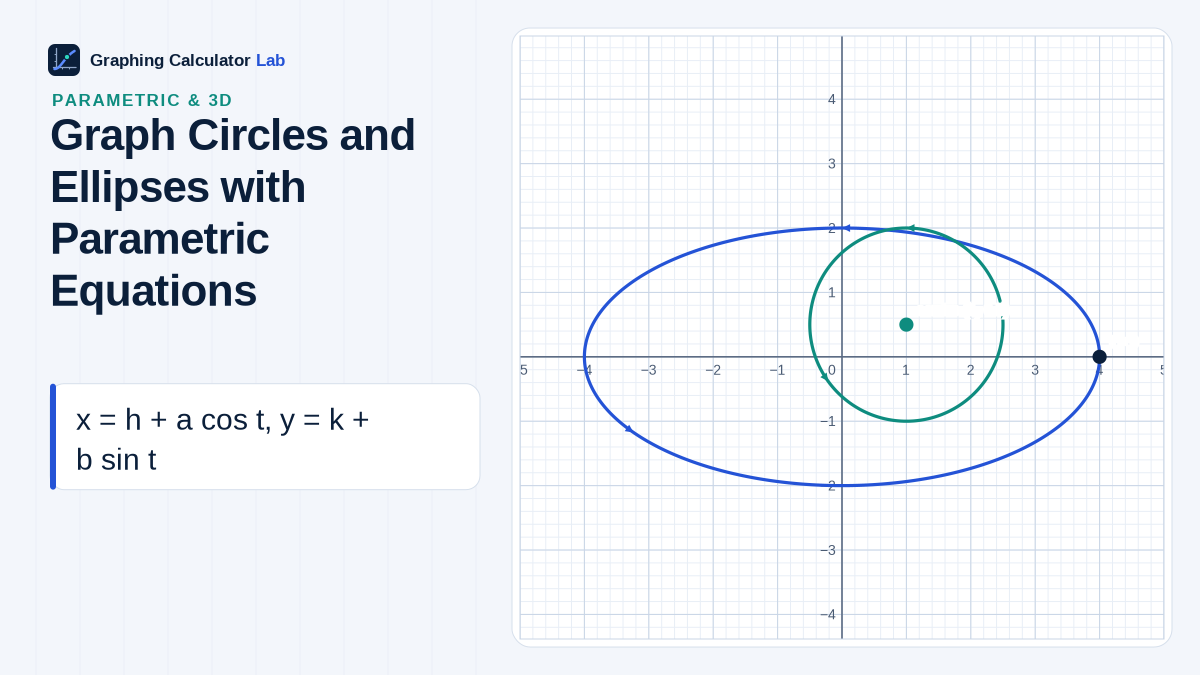
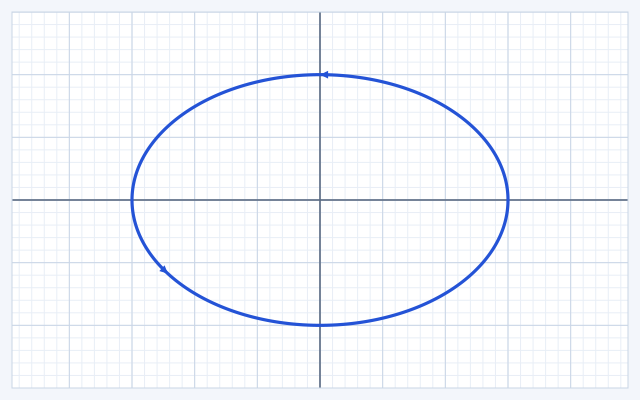
Write and graph circles and ellipses parametrically: x = h + r cos t, y = k + r sin t and x = h + a cos t, y = k + b sin t, with centre, radius, axes and direction.
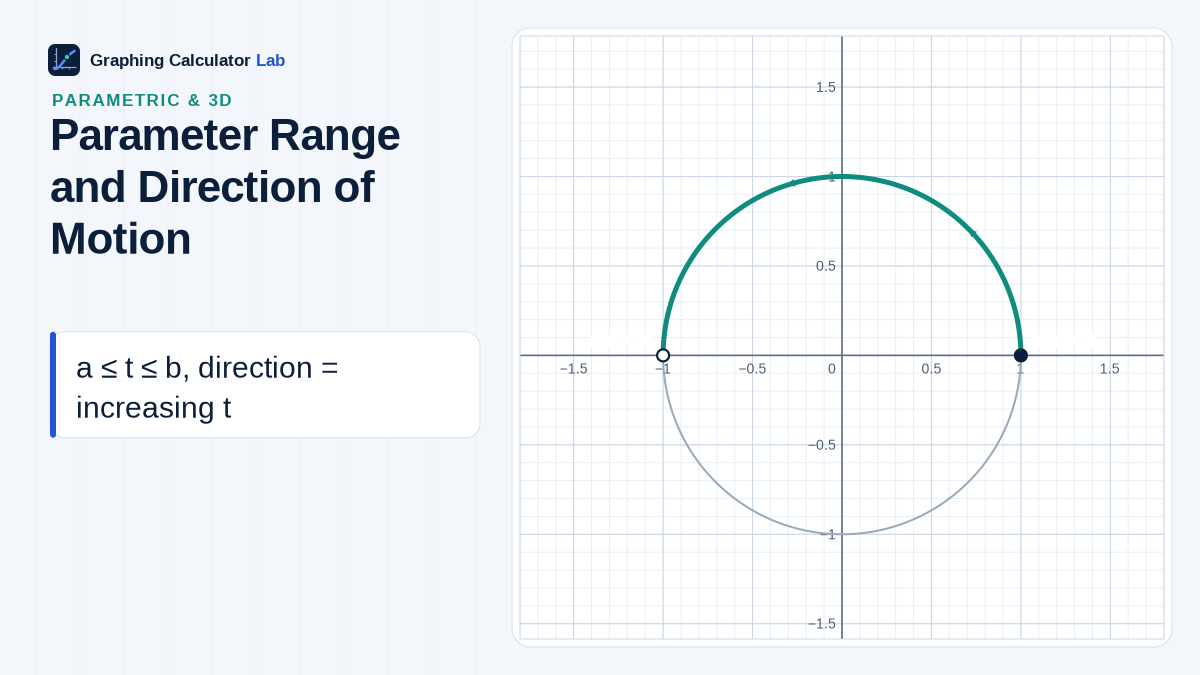
How the parameter range decides which part of a curve is drawn, and how to find and change the direction and speed of motion along a parametric path.
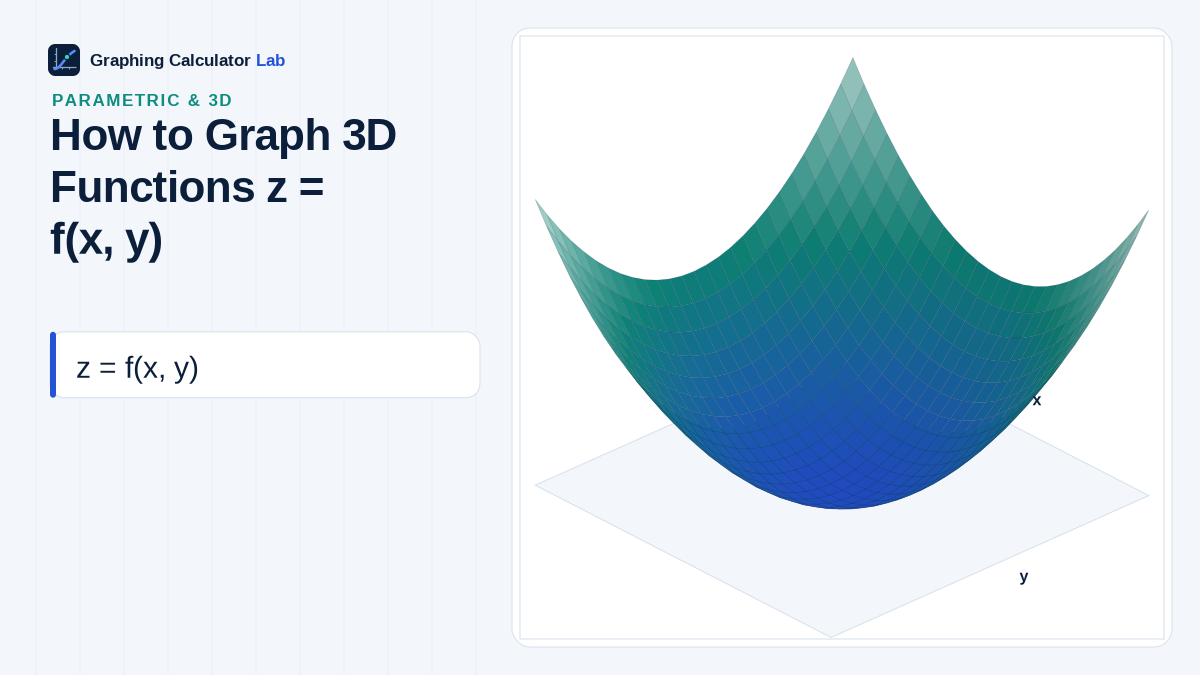
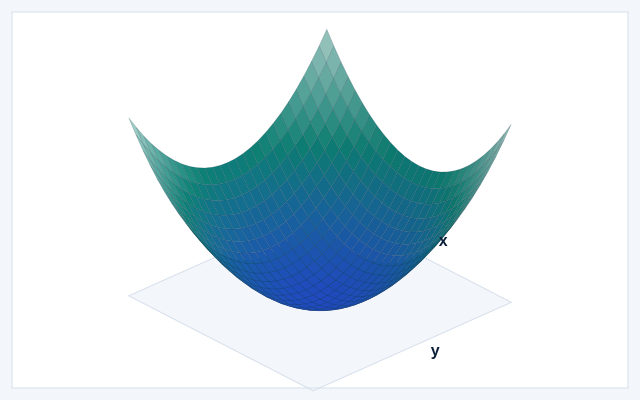
What a 3D graph of z = f(x, y) shows, how to choose the x and y domain, how to rotate and read the surface, and what paraboloids, saddles and waves look like.
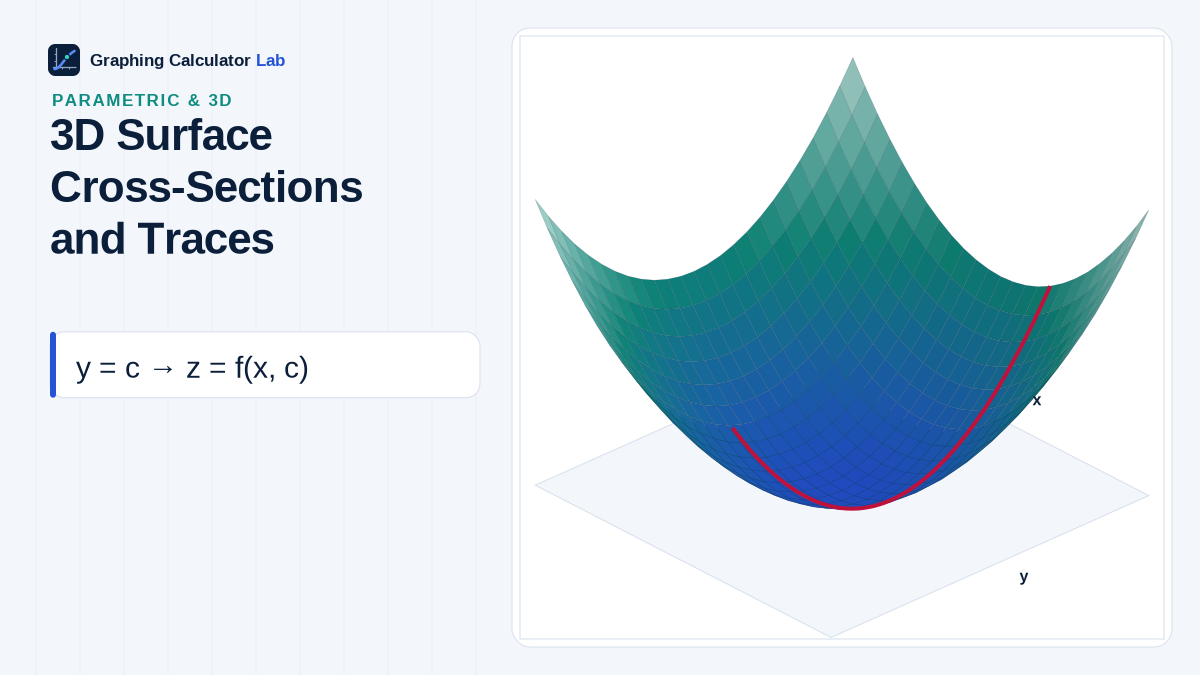
A cross-section (trace) slices a 3D surface with a plane like y = 1 to give an ordinary 2D curve. Learn how to find traces, read them, and use them to identify surfaces.
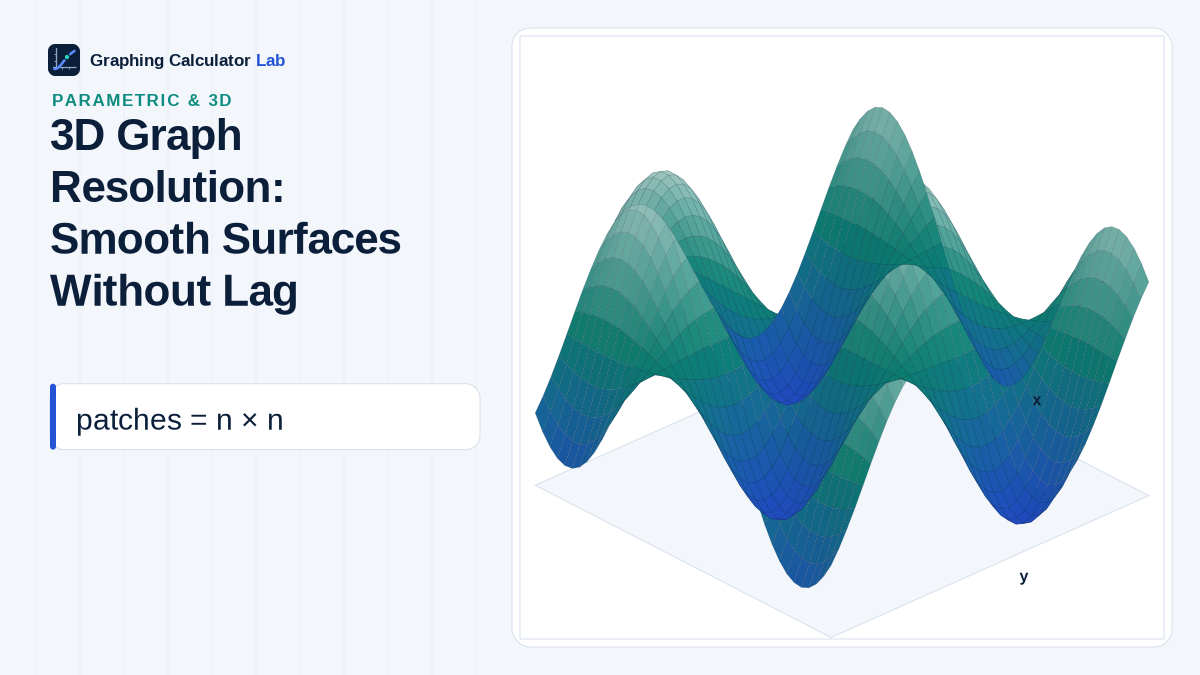
Why a 3D surface looks blocky or slow, how grid resolution works, and how to choose the domain and resolution so peaks, poles and waves are drawn accurately.
x(t), y(t) over a t-range with direction arrows, start/end points and trace.
Surfaces z = f(x, y) you can rotate, with x- and y-cross-sections.