Polar
Polar Coordinates: Radius, Angle and Negative Radius
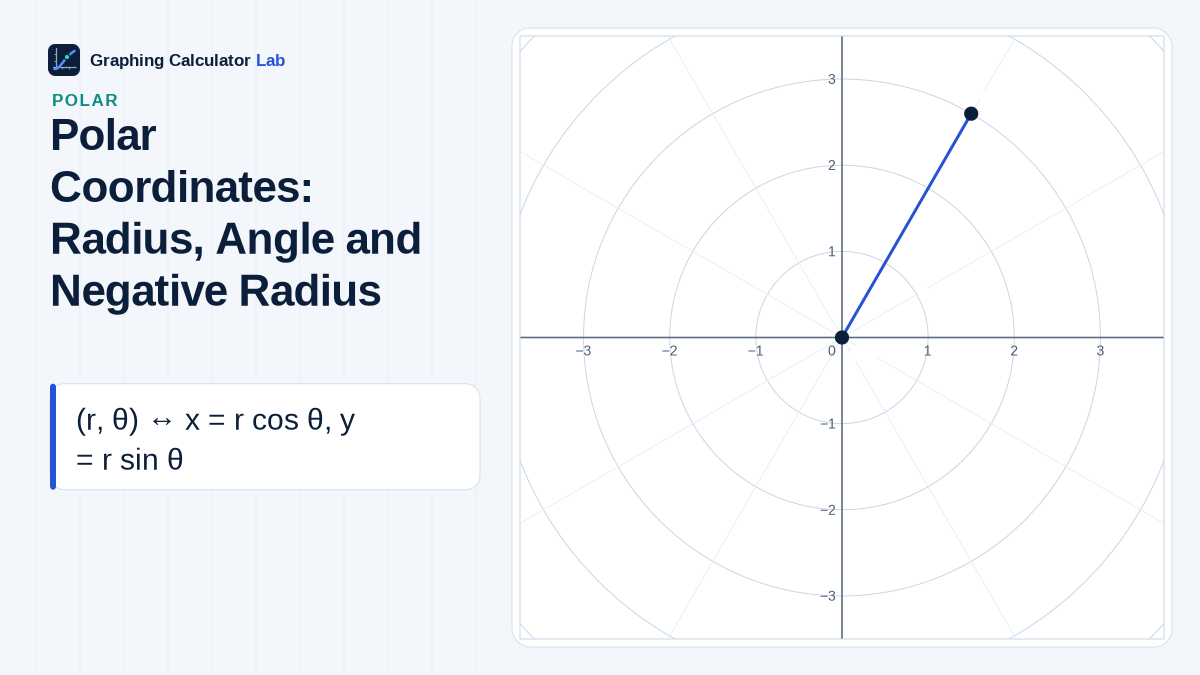
What polar coordinates (r, θ) mean, how to plot them, why one point has many polar names, how negative r works, and how polar compares with rectangular coordinates.
Guide topic
Polar coordinates, polar equations, rose curves, cardioids and limaçons, conversions, radians and degrees.
What polar coordinates (r, θ) mean, how to plot them, why one point has many polar names, how negative r works, and how polar compares with rectangular coordinates.
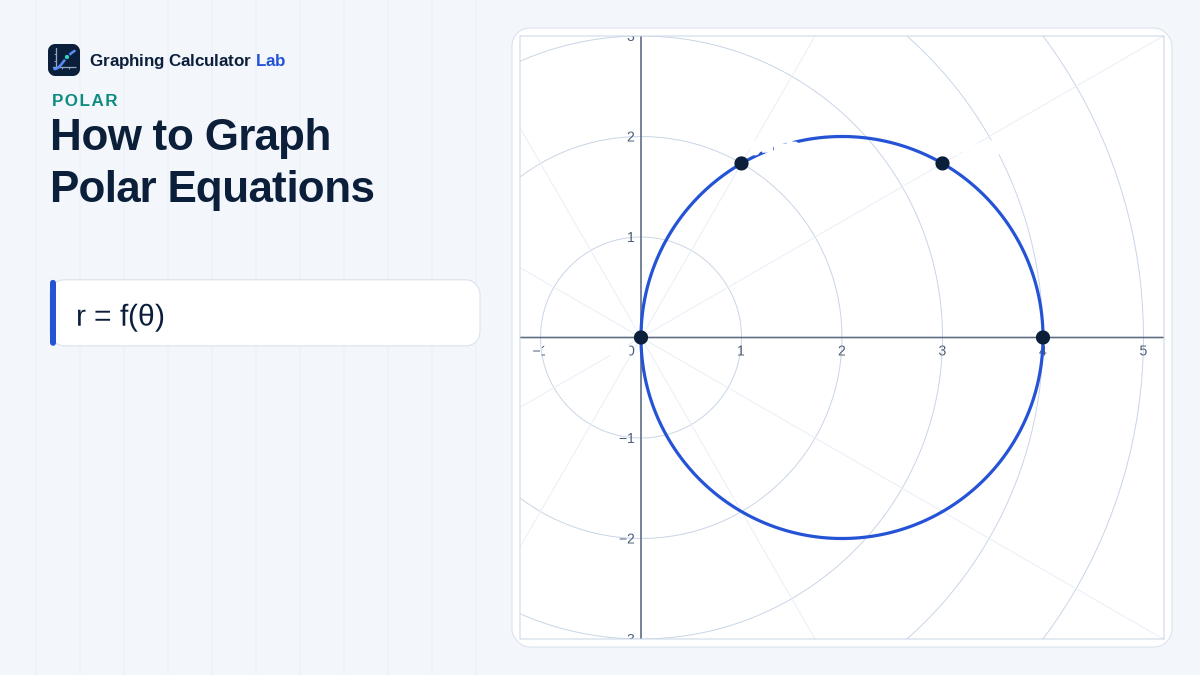
Graph a polar equation r = f(θ) with a table of θ and r values, a polar grid and symmetry tests — circles, lines, spirals and more.
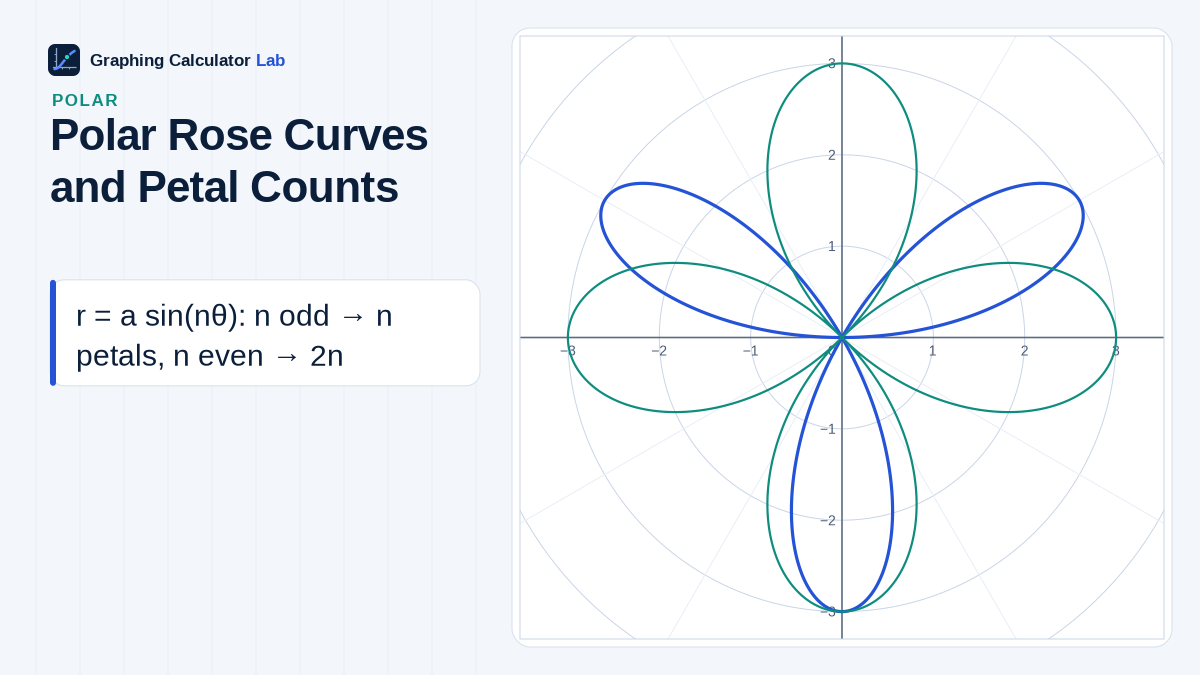
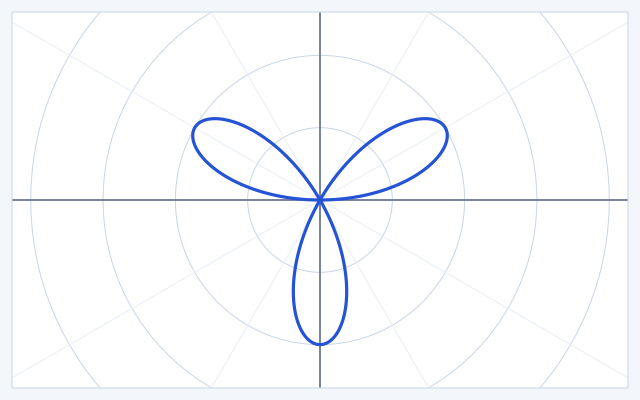
Graph rose curves r = a sin(nθ) and r = a cos(nθ): n petals when n is odd, 2n when n is even, petal length |a|, and where the first petal points.
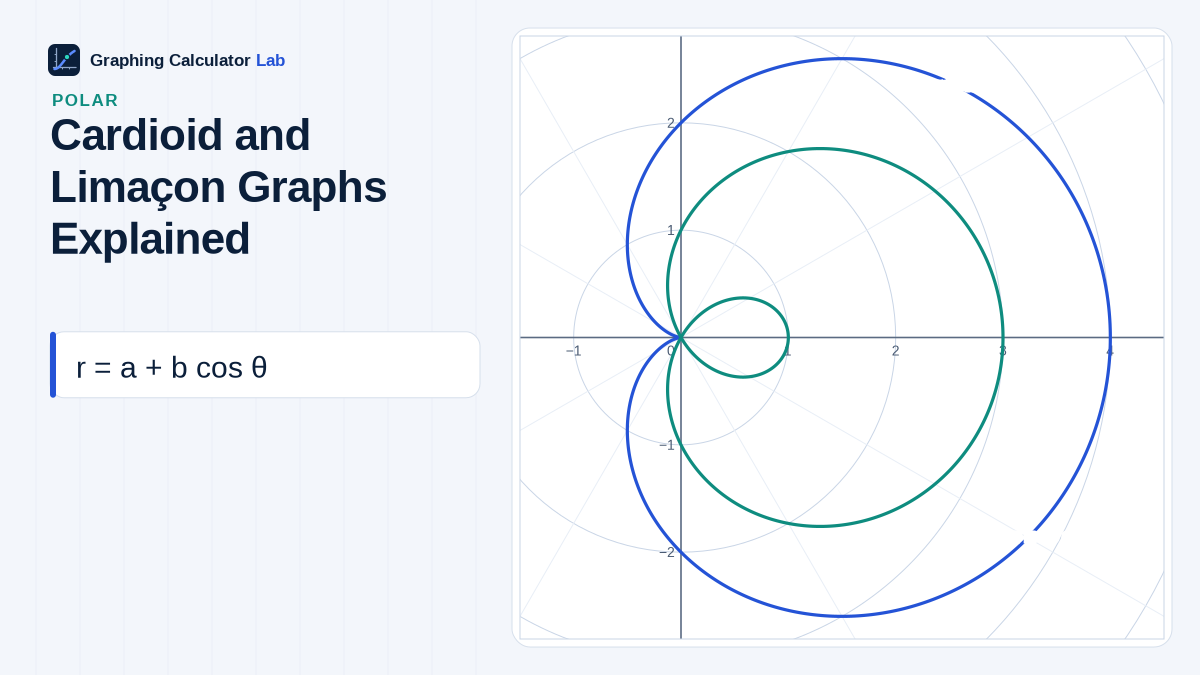
Graph r = a + b cos θ and r = a + b sin θ: how the ratio a/b decides between an inner-loop limaçon, a cardioid, a dimpled limaçon and a convex limaçon.
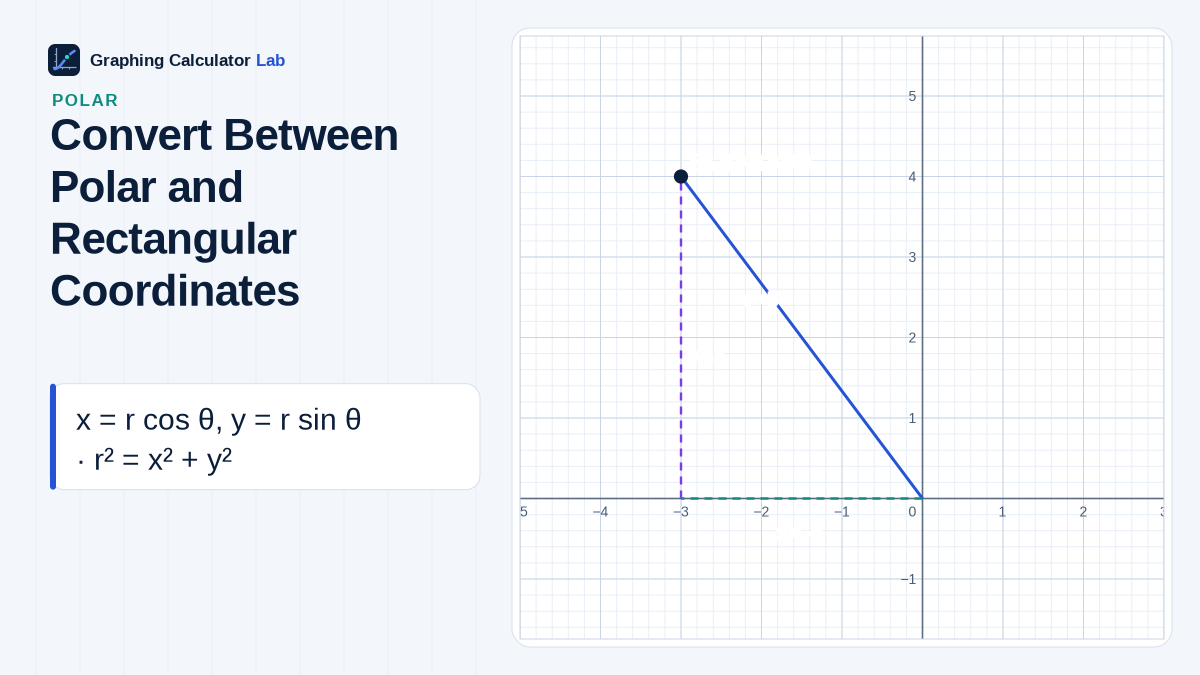
Convert points and equations between polar (r, θ) and rectangular (x, y) coordinates, using atan2 to get the correct quadrant for the angle.
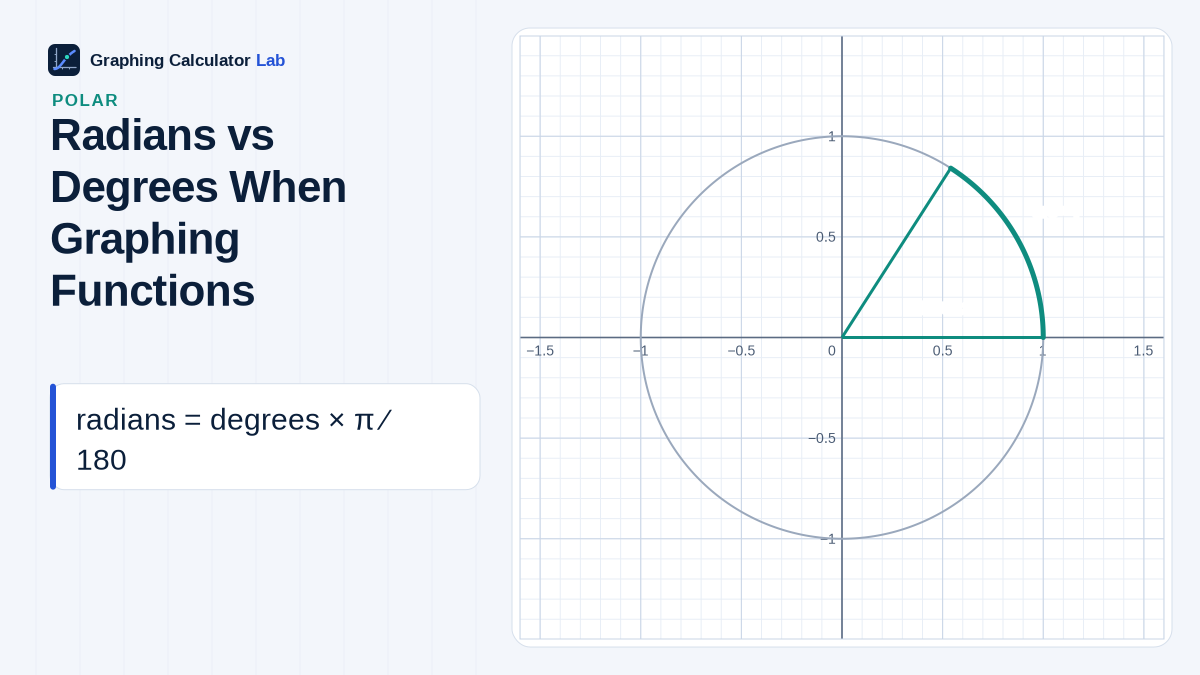
What radians are, how to convert between radians and degrees, and why choosing the right angle mode changes how trigonometric and polar graphs look.
Plot r(θ) on a polar grid, trace points and convert polar ↔ rectangular coordinates.
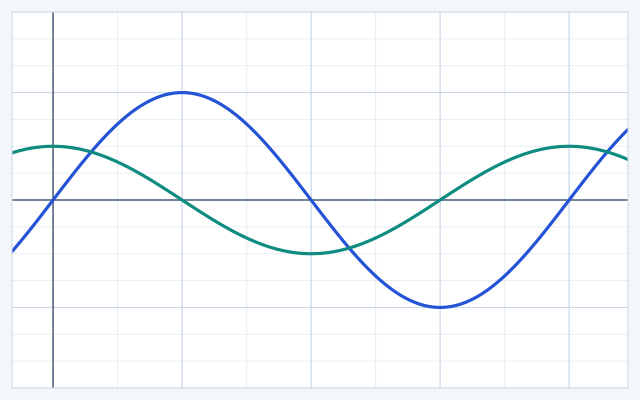
a·sin(bx + c) + d, cos and tan: amplitude, period, phase shift, midline.