Linear
Slope-Intercept Form: How to Graph and Write y = mx + b
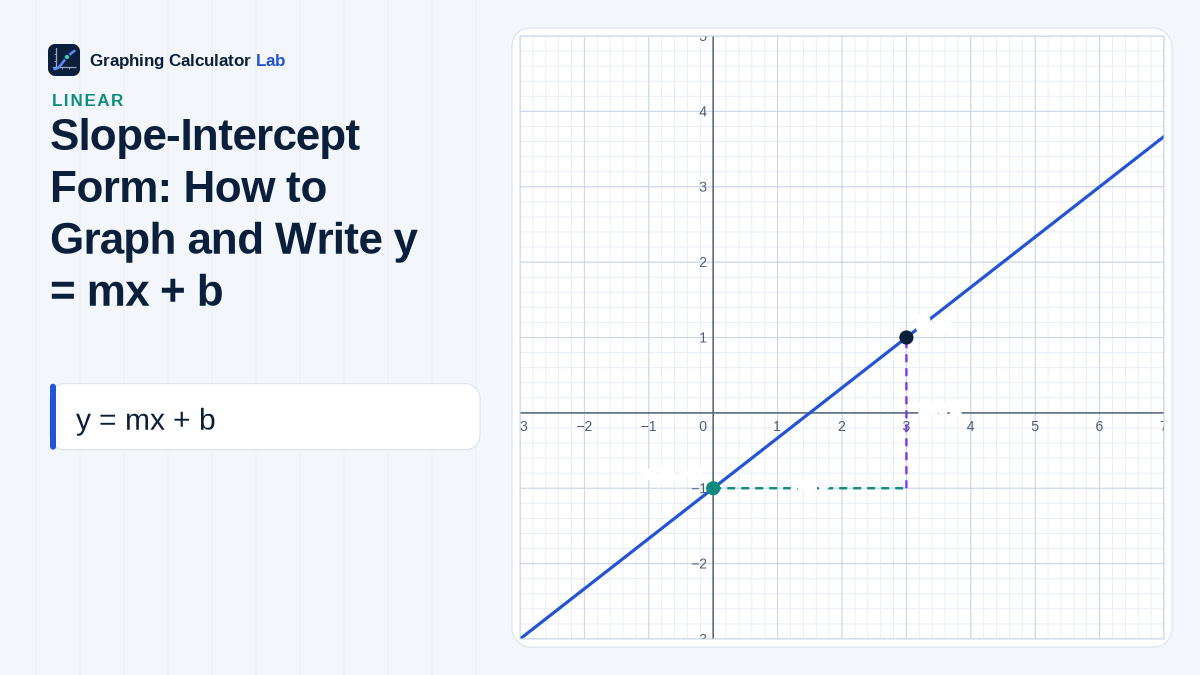
Slope-intercept form y = mx + b explained: what m and b mean, how to graph a line from it, and how to write the equation from a graph or two points.
Guide topic
Slope, slope-intercept and point-slope form, intercepts, parallel and perpendicular lines, and systems of equations.
Slope-intercept form y = mx + b explained: what m and b mean, how to graph a line from it, and how to write the equation from a graph or two points.
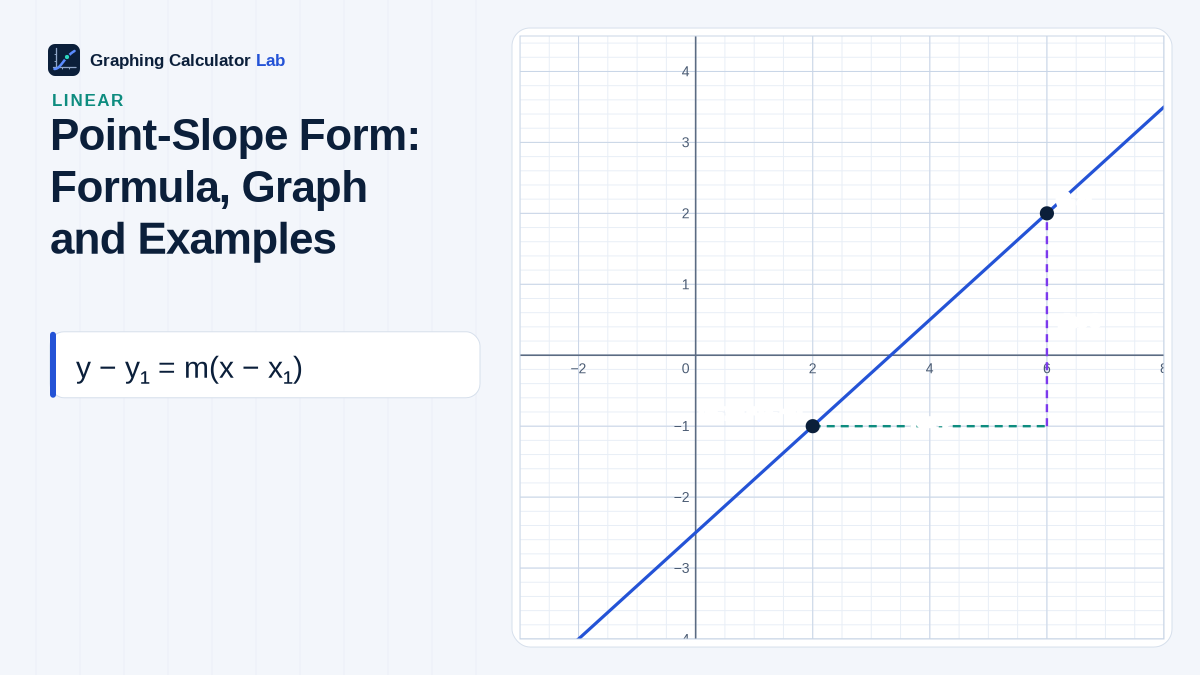
Point-slope form y − y₁ = m(x − x₁) writes a line from one point and its slope. Learn the formula, how to graph it, and how to convert it to y = mx + b.
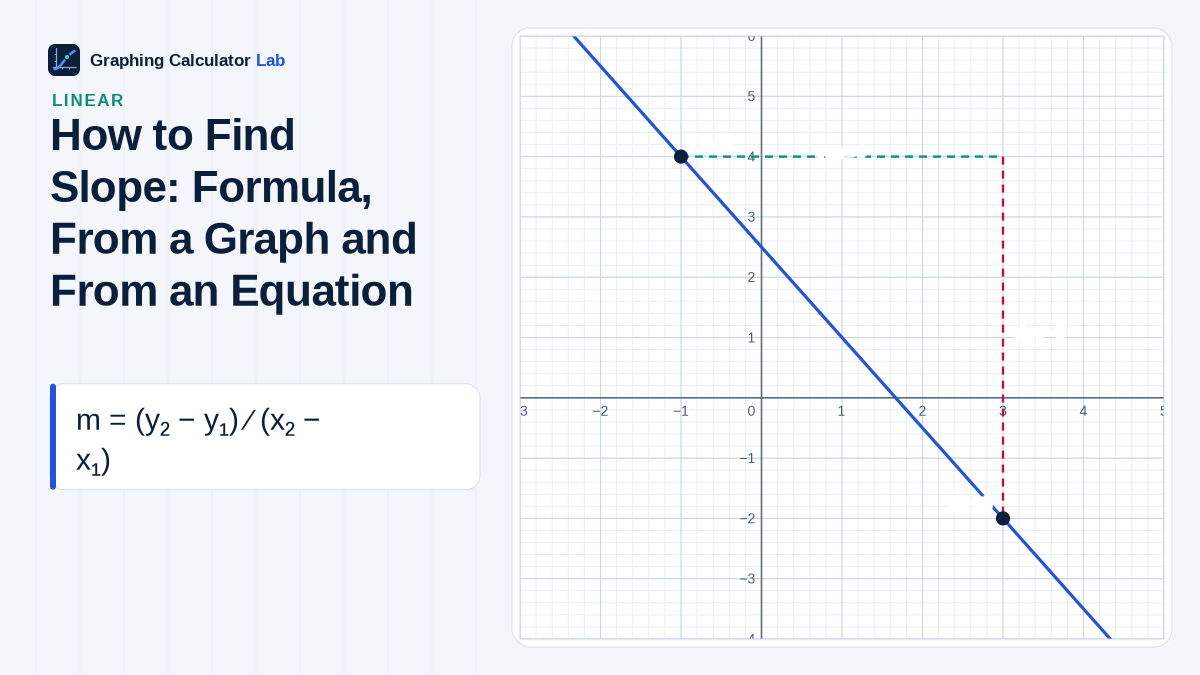
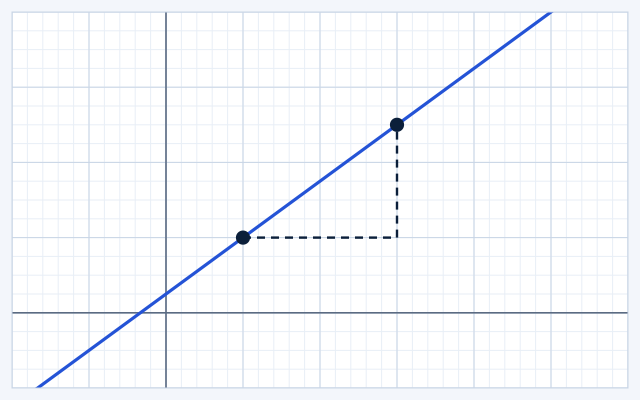
Find the slope of a line with the slope formula, by counting rise over run on a graph, or by reading it from an equation — including zero and undefined slopes.
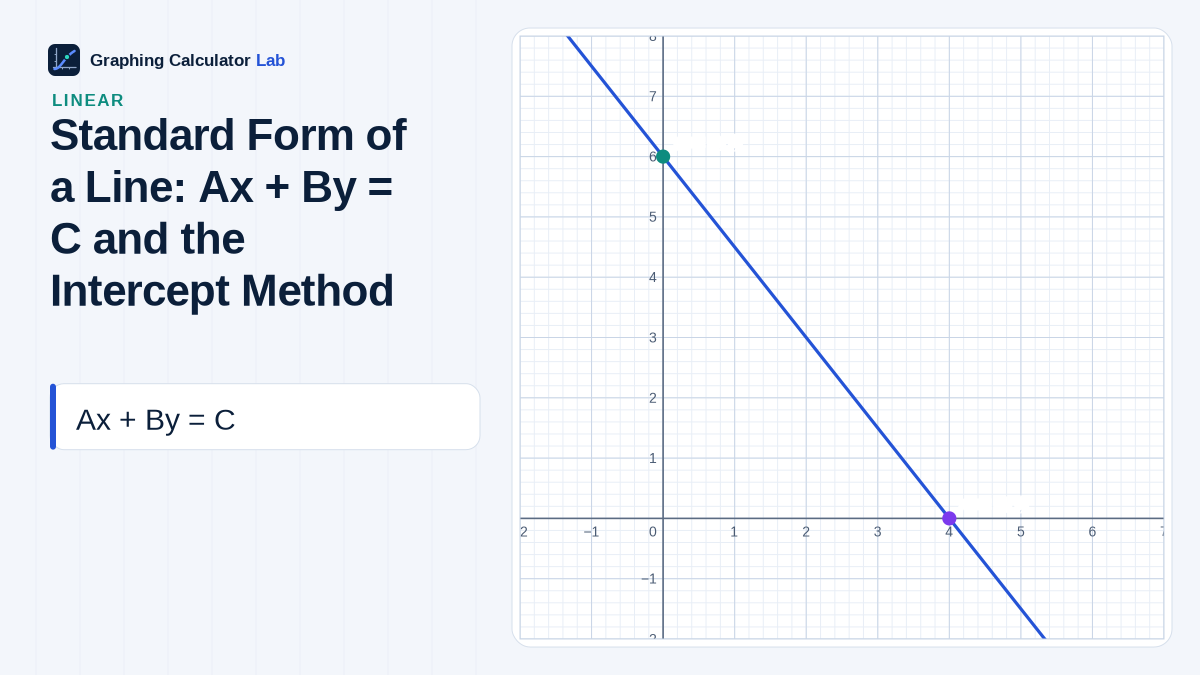
Standard form Ax + By = C explained: how to graph it quickly with intercepts, find its slope, and convert to and from slope-intercept form.
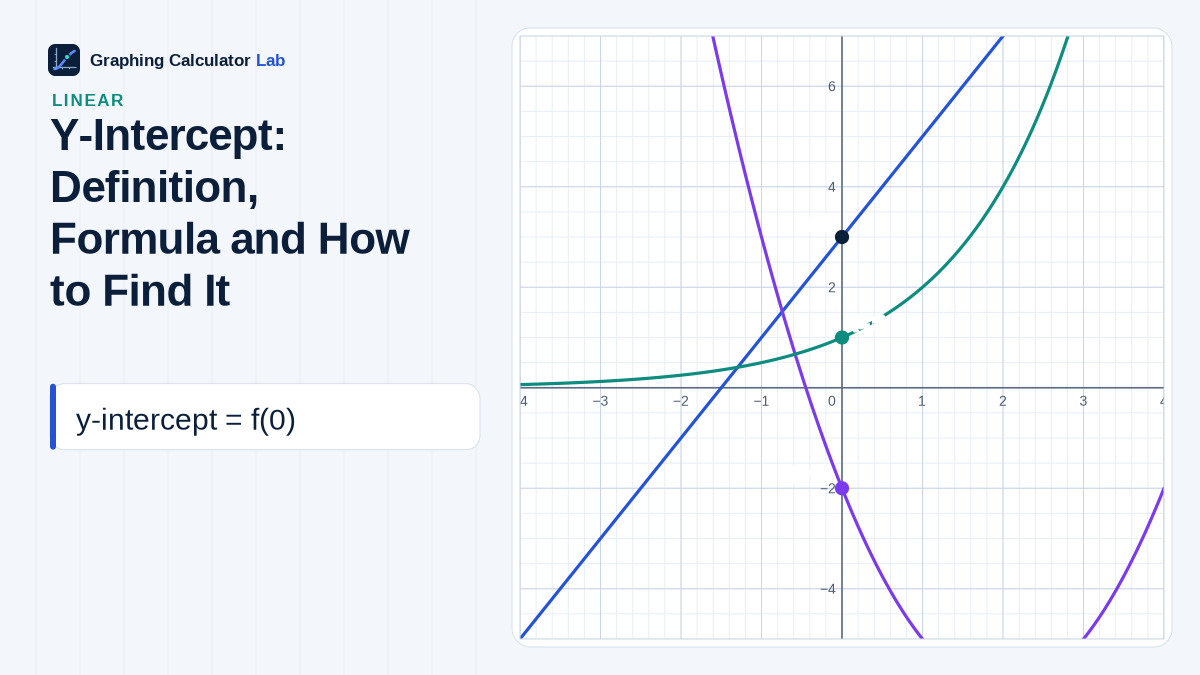
The y-intercept is where a graph crosses the y-axis. Find it by setting x = 0 — from an equation, a table or a graph — for lines and other functions.
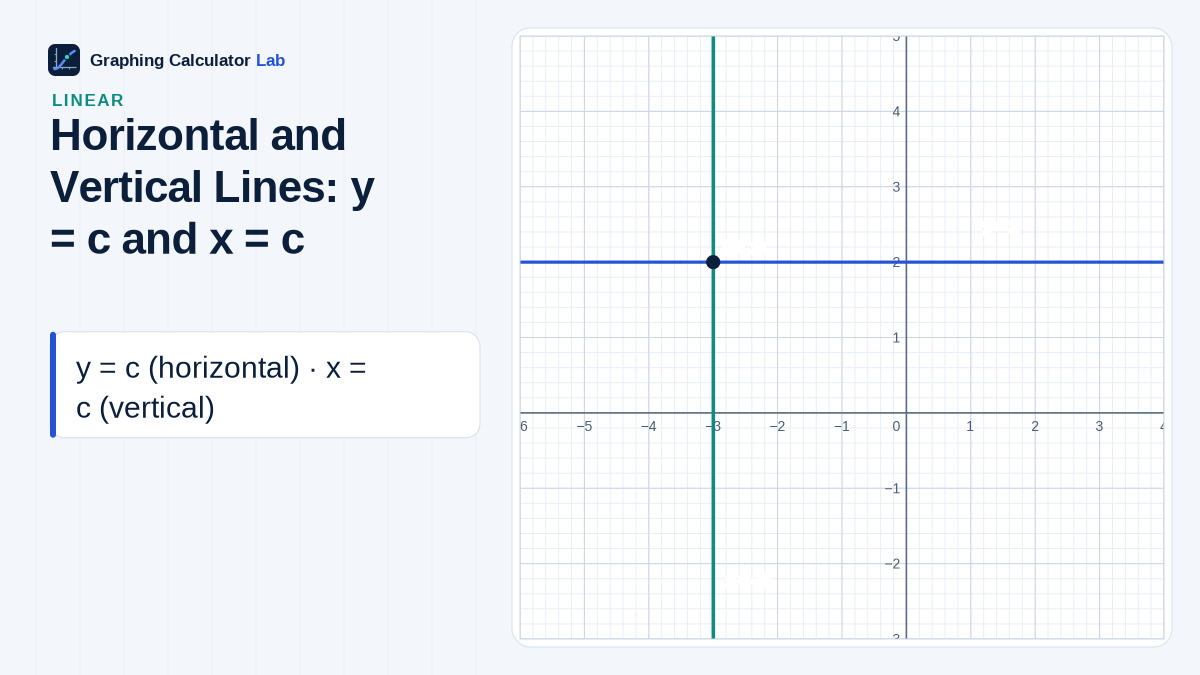
Horizontal lines are y = c with slope 0; vertical lines are x = c with undefined slope. How to graph them, write their equations and avoid mix-ups.
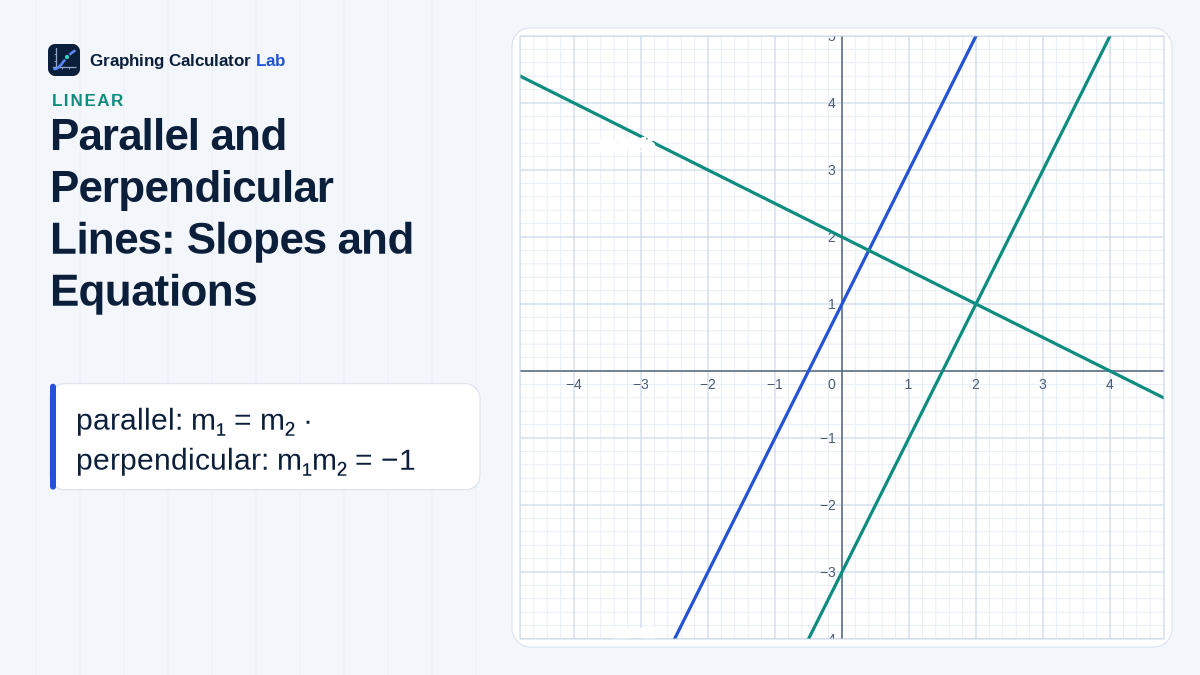
Parallel lines have equal slopes; perpendicular lines have slopes that multiply to −1. Identify them, and write the equation of a parallel or perpendicular line.
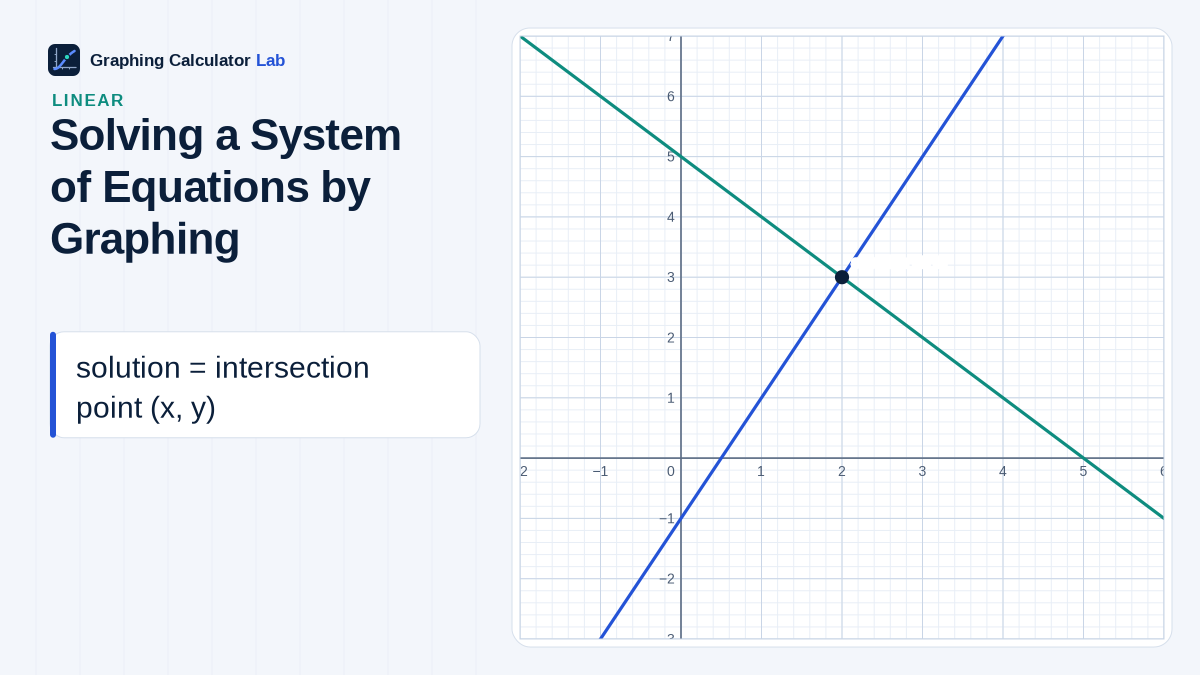
Solve a system of two linear equations by graphing: the intersection point is the solution. Learn the three cases — one, none or infinitely many solutions.
y = mx + b from two points, point-slope or standard form, with intercepts and graph.