Quadratic
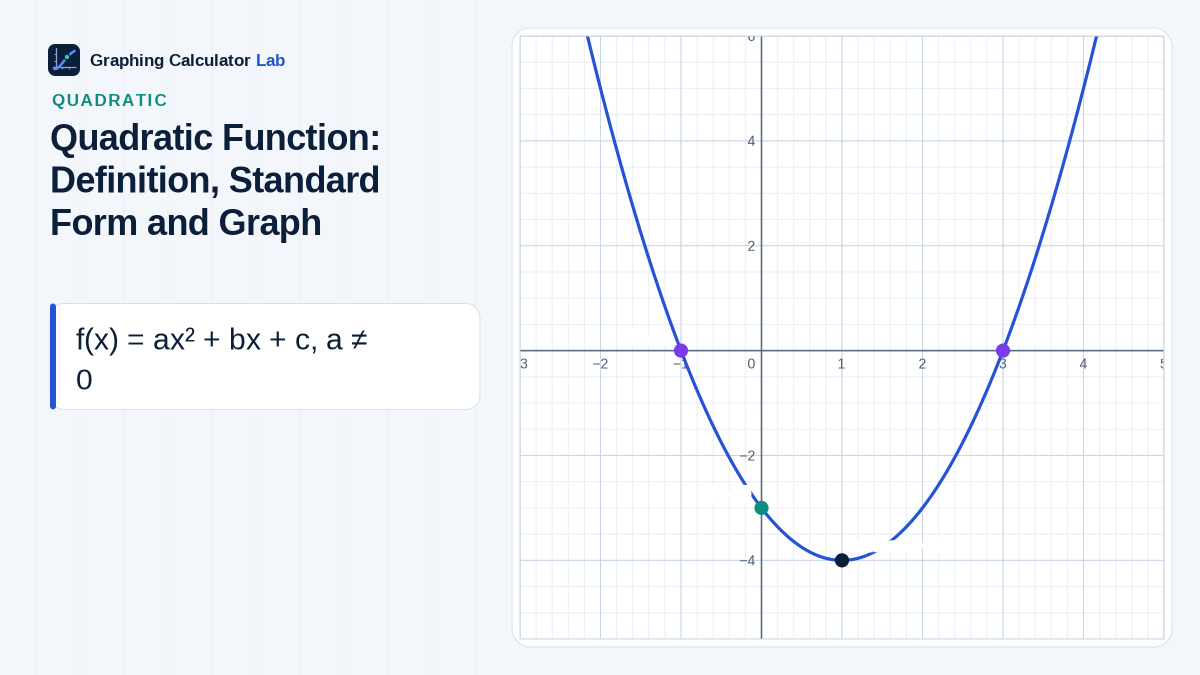
Quadratic Function: Definition, Standard Form and Graph
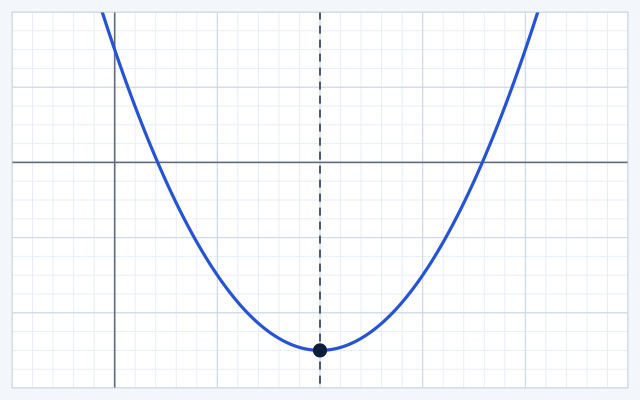
What a quadratic function is, how its standard form y = ax² + bx + c controls the parabola, and how to find the vertex, roots and y-intercept.
Guide topic
Quadratic functions in standard, vertex and factored form, the vertex, axis of symmetry, discriminant and roots.
What a quadratic function is, how its standard form y = ax² + bx + c controls the parabola, and how to find the vertex, roots and y-intercept.
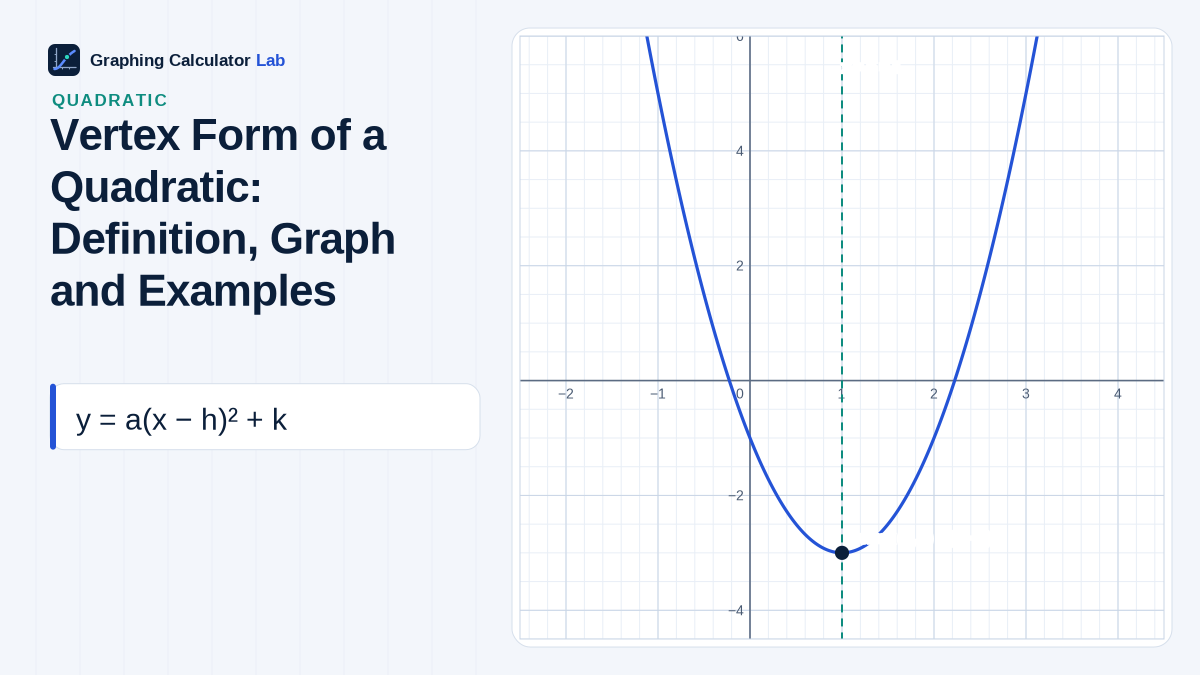
Learn what vertex form y = a(x − h)² + k means, how to read the vertex and axis from it, how to graph it, and how to convert from standard form.
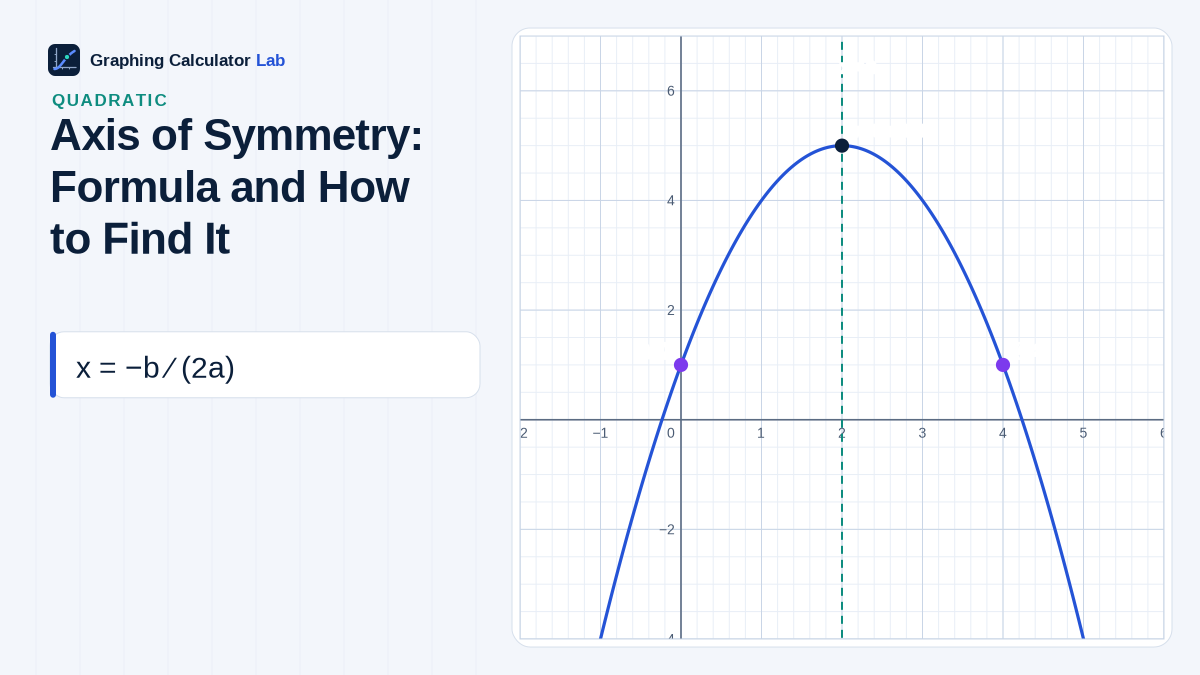
Find the axis of symmetry of a parabola with x = −b/(2a), from vertex form, from the roots or from a graph — with worked examples and common mistakes.
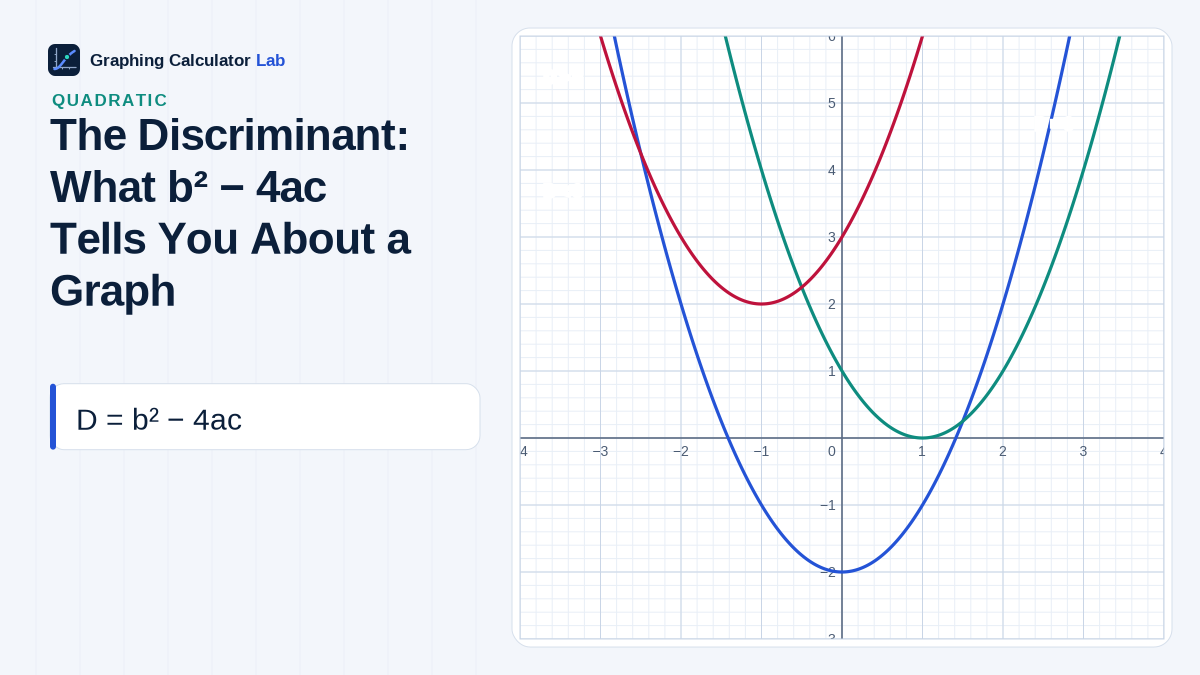
The discriminant b² − 4ac tells you how many real roots a quadratic has and how its parabola meets the x-axis. Formula, examples and graphs.
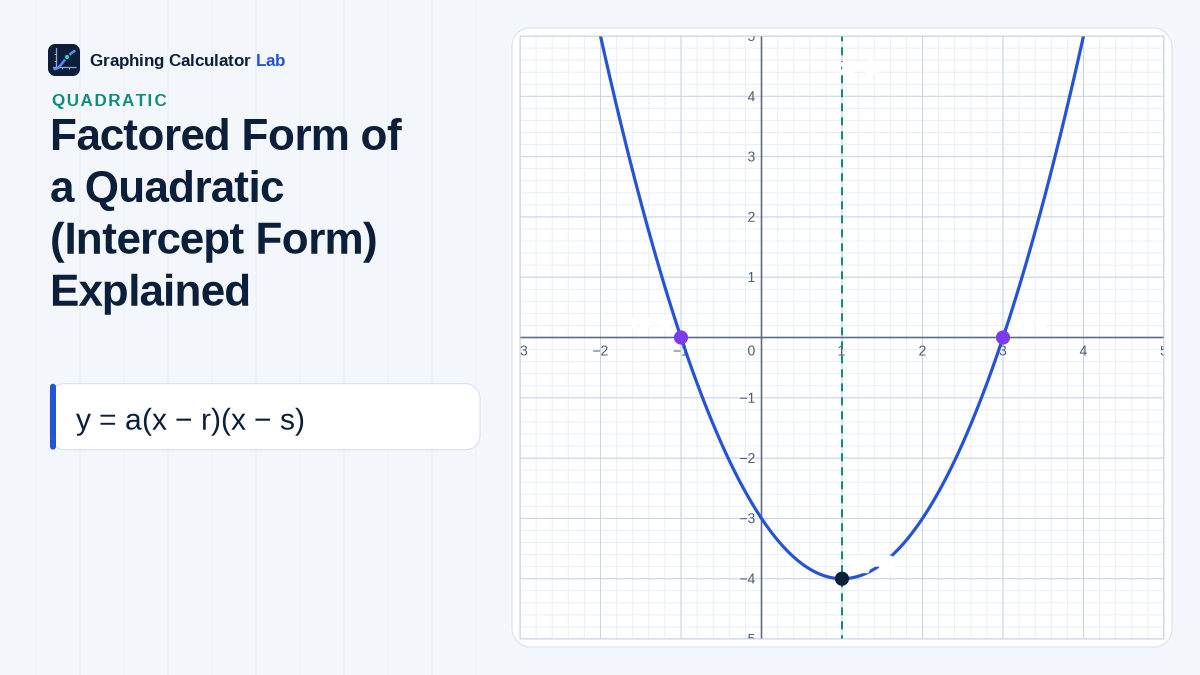
Factored form y = a(x − r)(x − s) shows a parabola’s x-intercepts directly. Learn to read, graph and convert factored (intercept) form with examples.
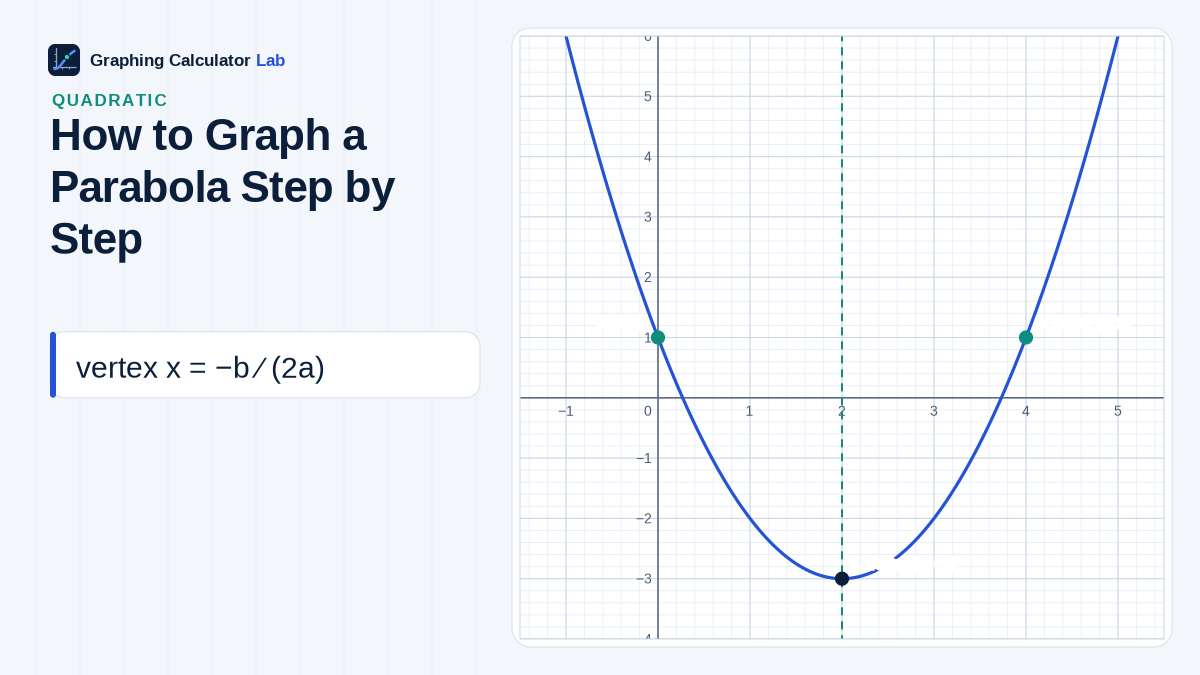
A five-step method to graph any quadratic function by hand: direction, vertex, axis, intercepts and mirror points — checked with a graphing calculator.
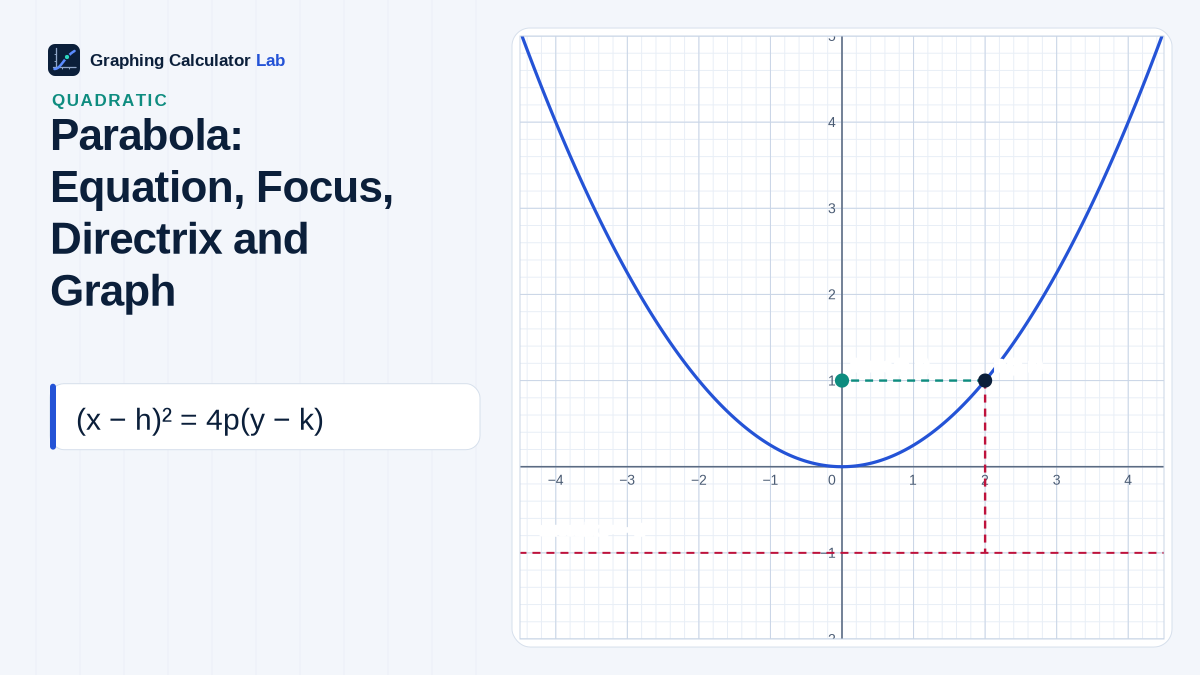
What a parabola is, how its equation relates to the focus and directrix, how to find them from y = a(x − h)² + k, and how to graph it.
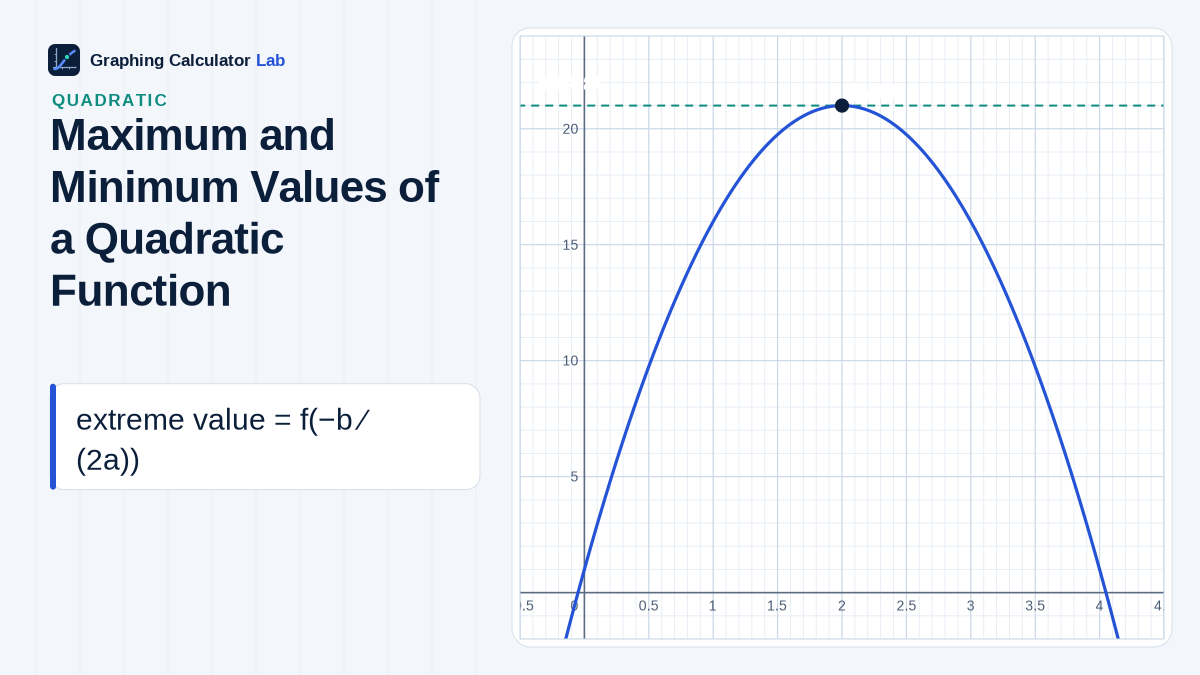
Find the maximum or minimum value of a quadratic from its vertex, and the max and min on a closed interval, with worked examples and a word problem.
Standard ↔ vertex form with steps, vertex, axis, roots, max/min and graph.
Plot several functions, points and inequalities; find roots, intersections and turning points.